Northern Kentucky & Greater Cincinnati
Woven Wood / Natural Shades
Organic texture. Earthy warmth.
Quick Answer
Natural textures, organic beauty — available from Hunter Douglas, Graber, Norman with free in-home consultation and professional installation in Northern Kentucky and Greater Cincinnati. Call (859) 446-8123 for a free quote.
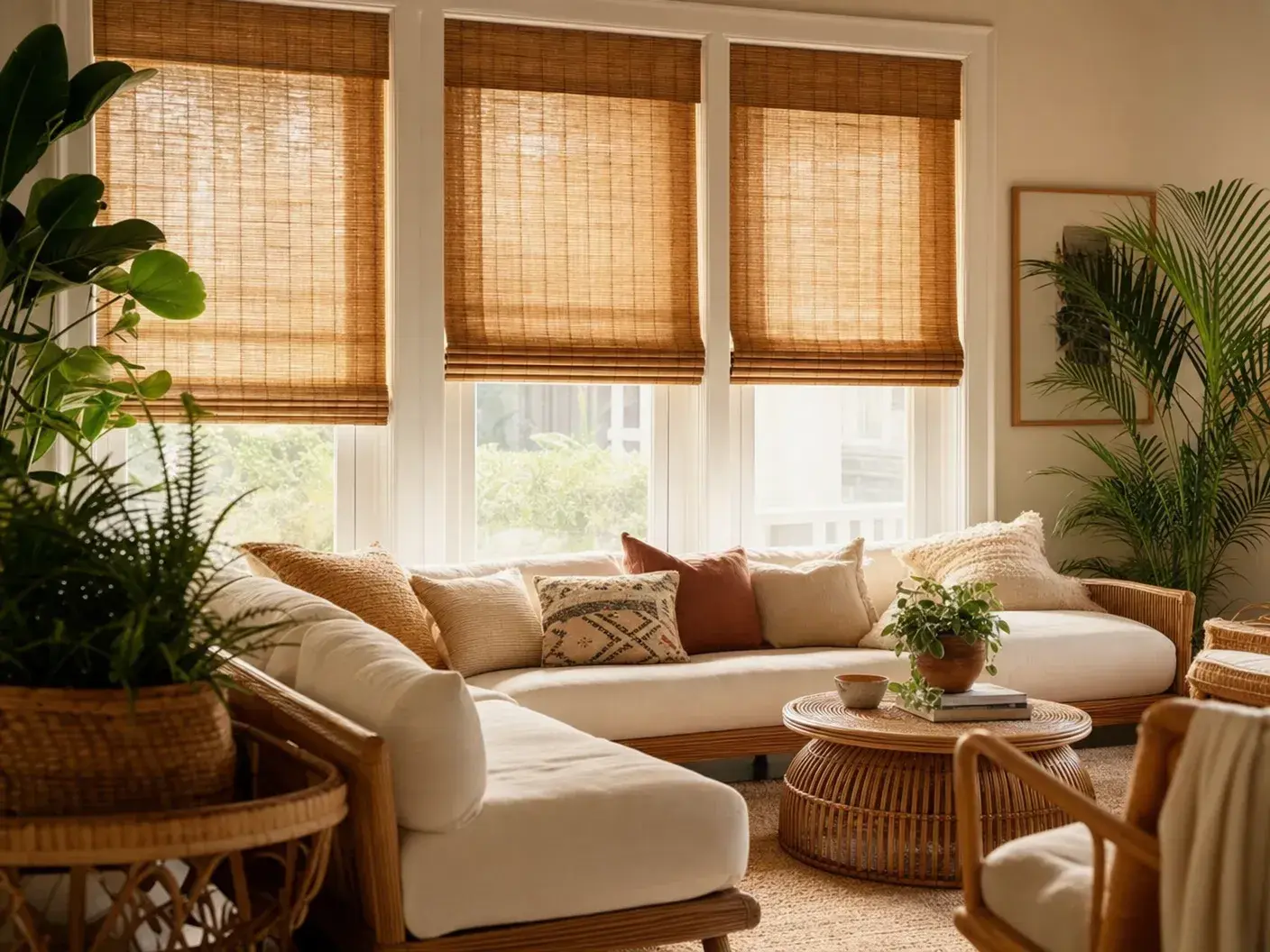
Woven wood shades are crafted from natural materials like bamboo, reeds, grasses, and jute, bringing organic warmth and texture to your windows. Each shade has a unique character that adds depth and interest to any interior.
These natural shades filter light beautifully, casting warm, dappled shadows that create a cozy, inviting atmosphere. Available in a wide range of materials and weave patterns, with liner options for added privacy.
What's Included
Key Features & Options
- Natural materials: bamboo, reeds, grasses, and jute
- Each shade is unique — no two are identical
- Warm, dappled light filtering
- Privacy and blackout liner options
- Cordless and motorized options
- Wide range of weave patterns and materials
- Eco-friendly and sustainable materials
- Professional installation included
Available From
Buying Guide
How to Choose Woven Wood Shades
Woven wood shades bring texture that a printed fabric can't copy. Made from natural materials such as bamboo, reeds, grasses and jute, each one is a little different, and each filters light into a warm, dappled glow. Here's how to choose them well, and where they work best in a home.
Materials and weaves
Woven shades are made from bamboo, reeds, grasses, jute and seagrass, and the material sets the look. Bamboo and reeds give a more structured, linear texture; grasses and jute look softer and more casual. Tighter weaves let through less light and feel more tailored, while looser weaves glow more and read as more relaxed.
Because the materials are natural, expect variation in color and texture from shade to shade. That character is part of the appeal.
Bamboo is strong, with a slight natural sheen, and is usually woven in flat, even strips. Reeds are rounder and give a ribbed look. Grasses and seagrass are finer and more varied in tone, and jute has a chunky, rustic texture that sits well with linen and wool. The difference between them is as much about feel as color, so it's worth seeing them side by side in your own light.
Choosing the right weave for the light
Look at a window's light before choosing a weave. On a bright west- or south-facing window, a tighter weave or a light-filtering liner keeps glare down while still showing the texture. On a north-facing or shaded window, a looser weave lets more of the softer light through and makes the most of the shade's glow.
Light and privacy
On their own, woven shades filter light rather than block it, and at night, with lights on inside, you can see through the gaps in the weave. They're lovely in rooms where you want daylight softened and texture on show, but in a bedroom or a street-facing room you'll want a liner.
Liners
A liner attaches behind the shade and changes how it performs while keeping the natural look from inside. A light-filtering liner stops people seeing in and softens the light further. A blackout liner blocks the light that comes through the weave, which makes woven shades workable in bedrooms. Liners also give the back of every shade the same clean color from the street, which is worth considering on the front of a house.
Sun and moisture
Natural materials react to their surroundings. In strong, direct sun, some materials can lighten or change color over the years, much as wood furniture does, and a liner helps protect the back of the shade. Woven shades also aren't the best choice for very humid spots such as a shower window, where moisture can affect natural fibers. In those rooms, faux wood blinds hold up better.
Compare faux wood blinds →Cordless and motorized
Woven shades come with cordless and motorized options. Cordless shades lift by hand from the bottom rail, with no cords for children or pets to reach. Motorized versions raise and lower at the touch of a button, and they suit wide windows, where a large woven shade is heavier to lift, and windows that are hard to reach.
Mounting and stack
Woven shades mount inside the frame for a built-in look, or outside to cover more of the edges and make a window look larger. When raised, the shade folds into a stack at the top of the window; on shorter windows, mounting above the frame lets the stack sit clear of the glass so you keep the whole view.
Layering and style
Woven shades work with many styles, from coastal and farmhouse rooms to modern spaces that need warmth. They layer well with drapery: the shade brings texture and light control, and the panels add color and softness at the sides. In a room with several windows, using the same woven material throughout keeps the texture feeling intentional rather than busy. Woven shades under stationary linen panels are a classic pairing that works in almost any room.
Custom drapery →Where woven shades work best
They're a natural fit for living rooms, family rooms, sunrooms and dens, and anywhere that feels a little cold or plain. With a blackout liner they work in bedrooms too. They're also a thoughtful choice if you'd like a window treatment made from renewable natural materials. In a sunroom they soften strong light while keeping an outdoors feel, and in a dining room they add warmth without the formality of drapery.
Woven shades across a whole house
Woven shades don't have to be everywhere to work. Many homes use them in living spaces, where the texture shows best, and use cellular or roman shades in similar tones in bedrooms and bathrooms. Keeping colors related from room to room, and using liners on street-facing windows, keeps the outside of the house looking consistent.
Compare cellular shades →Common mistakes to avoid
The most common is skipping the liner on a street-facing or bedroom window, then discovering how much the weave shows at night. Another is expecting every shade to match perfectly, when natural variation is part of the product; ordering all the shades for a room together gives them the best chance of sitting well side by side. Woven shades also don't belong in a shower window or a steamy bathroom. And in a home office, a very loose weave lets in more glare than you'd like, so choose a tighter weave or add a light-filtering liner.
Cleaning and care
Dust woven shades regularly with a soft brush or a vacuum on low with a brush attachment, working with the direction of the weave. Avoid water and cleaning sprays, which can stain natural fibers; a professional cleaner is the safest option for anything more than dust. If something stops working later, such as a stuck lift or a broken part, our repair team can diagnose and fix most problems, and can often source replacement parts.
Repair and maintenance →Questions to think about before your consultation
Which rooms need privacy at night, and which only need softened daylight? Do you prefer the structured look of bamboo and reeds or the softer look of grasses and jute? Are any windows in steamy rooms or strong, direct sun? And are any wide or hard to reach? Answers to those questions tell us which materials, liners and lifts suit each window.
What to expect
At your free in-home consultation we bring samples, measure each window precisely, and give you a detailed quote, with no obligation. Everything is made to order; most custom products arrive in three to six weeks, and most installations are finished in a single visit. Before we leave, we'll show you how to operate and care for everything.
How a free consultation works →Serving Greater Cincinnati and Northern Kentucky
We measure and install across Greater Cincinnati, including Hyde Park, Oakley, Mariemont, Madeira and Montgomery, and throughout Northern Kentucky from our showroom in Florence. Consultations are free, and we bring the samples to your home so you can judge colors and fabrics in your own light.
Window treatments in Cincinnati →Free Consultation
Ready to get started?
We offer free in-home consultations throughout Northern Kentucky and Greater Cincinnati.
REQUEST A FREE QUOTE (859) 446-8123Free In-Home Consultation
Get a Quote for Woven Wood / Natural Shades
By submitting, you consent to receive SMS messages and calls from A Shade Above. Msg & data rates may apply. Reply STOP to opt out. Privacy Policy.
Frequently Asked Questions
Woven Wood / Natural Shades — Common Questions
What materials are woven wood shades made from?+
Woven wood shades (also called natural shades) are crafted from natural materials including bamboo, reeds, grasses, jute, and seagrass. Each shade is unique, with slight variations in color and texture that add natural character to your windows.
Do woven wood shades provide privacy?+
Woven wood shades filter light beautifully but are not fully opaque on their own. For added privacy, we offer liner options including light-filtering and blackout liners that attach behind the shade while preserving its natural appearance from the outside.
Are woven wood shades good for the environment?+
Yes. Woven wood shades are made from renewable natural materials and are one of the more eco-friendly window treatment options available. Many of our natural shade collections are sourced from sustainably managed materials.