Northern Kentucky & Greater Cincinnati
Honeycomb / Cellular Shades
Energy efficiency meets clean design.
Quick Answer
Energy-efficient honeycomb design — available from Hunter Douglas, Graber, Norman with free in-home consultation and professional installation in Northern Kentucky and Greater Cincinnati. Call (859) 446-8123 for a free quote.
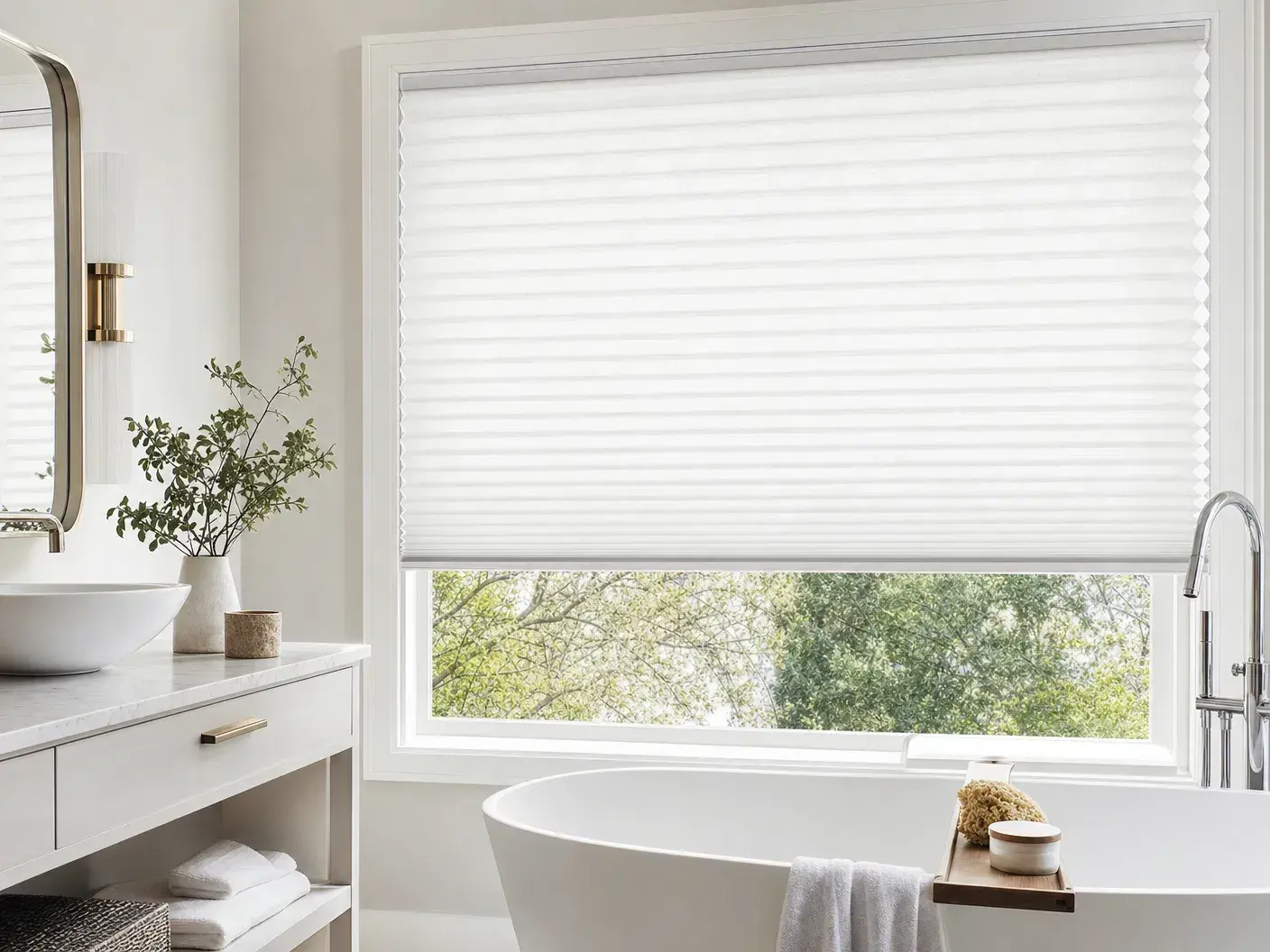
Honeycomb cellular shades trap air in their unique cell structure to insulate your home year-round, reducing heat loss in winter and heat gain in summer. Available in single, double, and triple-cell configurations for progressively greater insulation performance.
They come in a vast array of fabrics, colors, and opacities — from sheer to blackout — and are available in top-down/bottom-up configurations for ultimate light and privacy control.
What's Included
Key Features & Options
- Single, double, and triple-cell configurations
- Superior energy efficiency — reduces heating and cooling costs
- Available from sheer to room-darkening to blackout
- Top-down/bottom-up option for versatile light control
- Cordless and motorized operating systems
- Child and pet safe cordless options
- Wide range of colors and fabrics
- Professional installation included
Available From
Buying Guide
How to Choose Cellular (Honeycomb) Shades
Cellular shades are the workhorse of an energy-conscious home. Their honeycomb cells trap air against the window, which helps in both directions: less heat escaping in a Cincinnati January, and less heat pouring in on a July afternoon. They're also soft, quiet and simple to operate. These are the choices to make when ordering them.
Single, double or triple cell
The number of cell layers sets how much insulating air the shade holds. Single-cell shades are the most cost-effective and work well in most rooms. Double-cell shades trap more air for better energy performance. Triple-cell shades give the most insulation and are worth it in rooms with extreme temperature exposure, such as sunrooms, rooms with large expanses of glass, or bedrooms that always seem colder or hotter than the rest of the house.
Choose the opacity room by room
Cellular fabrics range from sheer through light-filtering and room-darkening to blackout. Sheer and light-filtering fabrics soften daylight and give daytime privacy in living rooms, kitchens and home offices. Room-darkening fabrics dim a room noticeably without making it pitch black. Blackout fabrics block virtually all light through the fabric itself, which makes them the choice for bedrooms, nurseries and media rooms.
It's common to use two or three opacities in one house. You can usually keep the same color throughout, so the windows look consistent from the street even though the rooms behave differently.
Choosing a color
Lighter colors keep a room bright and let the most daylight through a light-filtering fabric. Deeper colors look richer from inside, but in a sunny window they tint the light that comes through, so compare samples against the window in daylight rather than under a lamp.
Top-down/bottom-up
A top-down/bottom-up shade can be lowered from the top as well as raised from the bottom. Drop the top of the shade a foot or two and you get sky and daylight while the lower part of the window stays covered. It's especially useful on street-facing windows, in bathrooms, and in bedrooms that sit close to a neighbor's house, where you want light without being seen.
Cordless and motorized
Cordless cellular shades are raised and lowered by hand from the bottom rail, with no cords for children or pets to reach. Motorized versions do the same from a remote, an app or a voice assistant, and can run on a schedule, such as lowering in the afternoon to keep a west-facing room cool, then rising again in the morning. Motorization is also the practical answer for high windows you can't reach. A cordless lift is also easier on wide windows, because there's no cord to pull the full height of the shade.
Motorized shades →Cell size and appearance
Depending on the collection, cells come in more than one size. Larger cells mean fewer, bigger pleats, which look proportionate on large windows and tall doors. Smaller cells have a finer, tighter look that suits small and medium windows. When the shade is raised, it compresses into a slim stack at the top of the window, so it hides away better than most fabric shades.
Energy and comfort
Insulation matters most where there's a lot of glass: big windows, older single-pane windows, and rooms that get strong sun or none at all. Keeping cellular shades lowered on winter nights and through the hottest part of summer days is what delivers the comfort, so motorized schedules or simple habits help.
They won't replace a failing window, but they can make a room noticeably more comfortable and take some of the load off your heating and cooling. In a Cincinnati winter, lowering the shades at dusk helps hold in the warmth of the day; in summer, lowering them on sun-facing windows before the afternoon keeps the heat out.
Fit and light gaps
An inside mount sits neatly within the window frame, but any inside-mounted shade leaves a narrow gap of light at each side. That's fine in most rooms. In a bedroom where every bit of light matters, an outside mount that overlaps the frame, or blackout drapery layered over the shade, closes most of the gap.
Where cellular shades work best
Cellular shades earn their place in bedrooms and nurseries, where blackout fabrics and cordless operation matter; in sunrooms and rooms with a lot of glass, where extra cells pay off; and in any room that feels drafty in winter.
They're a less natural fit where you want to adjust light in small steps through the day, because a cellular shade is raised or lowered rather than tilted. For that kind of control, blinds, zebra shades or sheer shades are worth comparing.
Compare zebra shades →Pairing cellular shades with drapery
Cellular shades pair well with drapery. The shade does the daily work of light control and insulation, while panels on either side add color and softness and, if they close, extra darkness and warmth. In a bedroom, a blackout cellular shade under lined drapery is about as dark as a room with windows gets.
Custom drapery →Common mistakes to avoid
A few choices cause most regrets. Single-cell shades in a sunroom or a room with a wall of glass leave comfort on the table, where double or triple cell would make a real difference. An inside mount in a bedroom that needs to be dark lets light in at the edges. Skipping top-down/bottom-up on a street-facing window is common, and it's often the feature people end up wanting most. And a shade on a high window you can't reach tends to stay in one position for good, which is exactly where motorization earns its place.
Cleaning and care
Cellular shades need very little care. Dust them with a soft duster or a vacuum on a low setting with a brush attachment. Spot-clean marks gently with a damp cloth and let the fabric dry fully; don't soak the shade, because water can leave marks and flatten the pleats. If something stops working later, such as a stuck lift or a broken part, our repair team can diagnose and fix most problems, and can often source replacement parts.
Repair and maintenance →Questions to think about before your consultation
Which rooms feel coldest in winter or hottest in summer? Which need darkness for sleep, and which only need daytime privacy? Are any windows close to a neighbor's house or the sidewalk, where top-down/bottom-up would help? And are there windows you can't reach easily? Rough answers to those questions tell us how many cells, which opacity and which lift suit each room.
What to expect
At your free in-home consultation we bring samples, measure each window precisely, and give you a detailed quote, with no obligation. Everything is made to order; most custom products arrive in three to six weeks, and most installations are finished in a single visit. Before we leave, we'll show you how to operate and care for everything.
How a free consultation works →Serving Greater Cincinnati and Northern Kentucky
We measure and install across Greater Cincinnati, including Hyde Park, Oakley, Mariemont, Madeira and Montgomery, and throughout Northern Kentucky from our showroom in Florence. Consultations are free, and we bring the samples to your home so you can judge colors and fabrics in your own light.
Window treatments in Cincinnati →Free Consultation
Ready to get started?
We offer free in-home consultations throughout Northern Kentucky and Greater Cincinnati.
REQUEST A FREE QUOTE (859) 446-8123Free In-Home Consultation
Get a Quote for Honeycomb / Cellular Shades
By submitting, you consent to receive SMS messages and calls from A Shade Above. Msg & data rates may apply. Reply STOP to opt out. Privacy Policy.
Frequently Asked Questions
Honeycomb / Cellular Shades — Common Questions
Are cellular shades energy efficient?+
Yes. Cellular (honeycomb) shades are among the most energy-efficient window treatments available. Their unique cell structure traps air to create an insulating barrier, reducing heat loss in winter and heat gain in summer — which can meaningfully lower your heating and cooling bills in Northern Kentucky.
What is the difference between single, double, and triple-cell shades?+
Single-cell shades offer basic insulation and are a cost-effective option. Double-cell shades trap more air for better energy performance. Triple-cell shades provide the highest level of insulation and are ideal for rooms with extreme temperature exposure, such as sunrooms or rooms with large windows.
Can cellular shades block out light completely?+
Yes. Cellular shades are available in blackout fabrics that block virtually all light, making them ideal for bedrooms and media rooms. They also come in light-filtering and sheer options for rooms where you want privacy without complete darkness.
Related article: Custom Window Treatments in Northern Kentucky